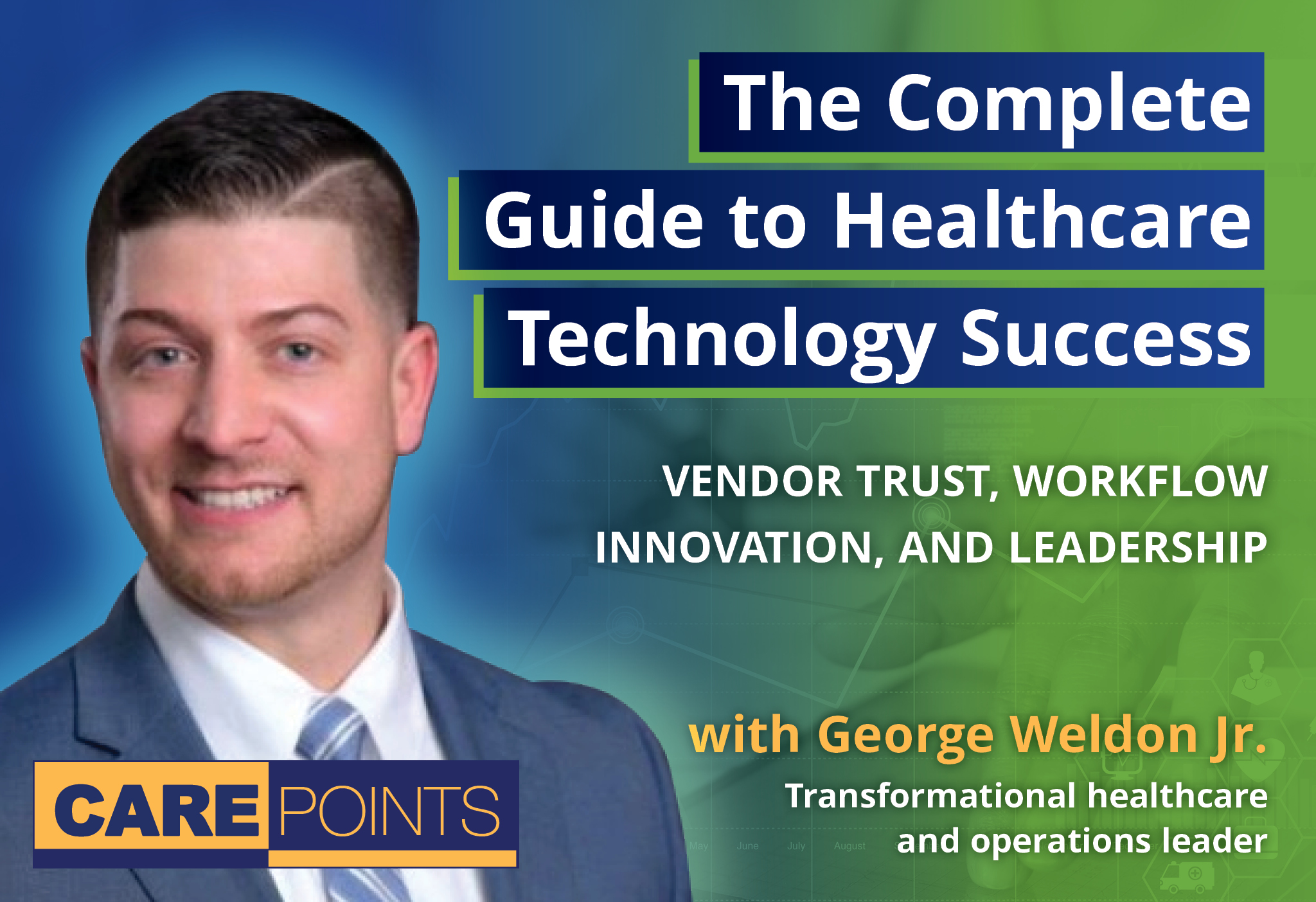
What does it really take to make healthcare technology adoption successful? It’s not about the latest gadgets or flashy demos; it’s about building authentic relationships, engaging the right stakeholders, and focusing on outcomes that matter. From earning trust with vendors to overcoming procurement and IT hurdles, these strategies help hospitals and technology partners create a lasting impact for patients and staff.
Being truly relationship-driven, not just transactional, requires genuine engagement that goes far beyond flashy sales tactics. George Weldon Jr., a transformational healthcare executive with nearly 20 years of experience, emphasizes that vendors should listen more than they pitch, align with organizational goals, and build coalitions across key stakeholders.
“Hospitals don’t buy technology, they buy outcomes,” said Weldon Jr. “It starts with human connection, building trust, and including the right voices.”

Vendor Empathy and Building a Trusting Relationship
One of the many factors in finding and maintaining a good relationship between hospitals and vendors is whether the vendors actually care about the well-being of caregivers, staff, patients, and everyone else their products touch. Having the mindset to do good and be curious about the other person or people on the other side of the transaction is the goal.
“My number one job is to support the well-being of our patients and our staff, for that matter. Does this vendor have empathy? Do they actually care to shadow a nurse at 6 a.m.?” said Weldon Jr. “I think that’s the kind of stuff that stands out. Who has the willingness to go beyond that transactional meeting?”
To be effective in the healthcare space, vendors need to go beyond the initial introduction and focus on consistency and relationship-building. Getting a foot in the door is only the beginning. Success depends on expanding connections with key stakeholders, including nursing leadership, facilities, IT, and clinical engineering.
Every healthcare site has unique goals and challenges, so understanding those differences is critical. Without broad support, even a small deal can take years to close. Building coalitions and aligning multiple voices is essential because even the best ideas won’t succeed if others aren’t on board.

Melding the Operational, Technical, and Clinical Elements
Practical solutions in healthcare are often pursued but rarely achieved without the right approach. Weldon Jr. leverages his broad clinical perspective to bridge technology and operations, focusing on elevating the voices of those who are often underserved or overlooked. He emphasizes the art and science of change management, observing non-verbal cues, fostering inclusion, and establishing governance structures that ensure improvements are not only implemented but sustained over time.
“I have a little bit of a unique edge starting my career as a therapist. I’ve really dove into the human psyche, human behavior, and industrial organizational psychology; it’s important to pay attention,” said Weldon Jr.
When it comes to workflows and business decisions, success depends on having the right voices at the table, whether it’s stakeholders with operational insight or patient family advisory committees offering a unique perspective. Clinical workflow decisions layered with technology involve countless variables, and overlooking any of them can lead to inefficiencies or missed opportunities for better care.
Equally important is what happens in the room during these discussions. Leaders should pay close attention to what isn’t being said as much as what is. Observing nonverbal cues and identifying those who aren’t championing the solution can reveal hidden resistance or misalignment. This awareness is critical for creating governance structures that foster collaboration and ensure the solution is embraced across the organization.

Navigating the Complexity of Hospital Technology Procurement and Implementation
Bringing new technology into a hospital isn’t just about buying equipment; it’s about finding solutions that truly fit the organization’s needs. The process involves balancing priorities across clinical teams, operations, and IT, while ensuring security and scalability. Rather than focusing on flashy features, successful partnerships emphasize value, outcomes, and trust.
When vendors and hospital leaders work together, building relationships, engaging stakeholders, and planning carefully, technology adoption becomes less overwhelming and more impactful for both patients and staff.
“What are my goals? What are my needs, organizationally?,” said Weldon Jr. ”How is this solution going to be better or higher prioritized than one of the other many needs of the organization to ensure the best outcome for patient care?”
Navigating hospital technology is never just about the tech; it’s about people, processes, and purpose. Success comes from building trust, aligning value rather than features, and involving the right stakeholders early.
When vendors and healthcare leaders collaborate with empathy, curiosity, and a long-term mindset, technology becomes more than a tool; it becomes a catalyst for better workflows, stronger teams, and improved patient care. In the end, hospitals don’t buy technology; they buy outcomes. And those outcomes depend on relationships as much as innovation.
George Weldon Jr. is a transformational healthcare leader with nearly 20 years of experience, including 15 years in leadership roles. His career spans analytics, innovative technologies, and enterprise-level operations, reflecting a unique blend of clinical insight, technical fluency, and strategic vision. George has led multi-site health systems, acute care hospitals, and technology-driven environments through cultural evolution, operational turnarounds, and major capital projects—always with a focus on patient- and people-centered outcomes. Known for pairing precision with empathy, he has driven measurable improvements in quality, efficiency, and financial performance while fostering collaboration across clinical, IT, and operational teams.

©1991-2025 Lone Star Communications, Inc. and/or its affiliates.