Falls remain one of healthcare’s most persistent—and preventable—safety challenges. They are costly in human terms (injury, fear of mobilizing, prolonged recovery) and organizational terms (longer lengths of stay, penalties, reputational risk). In rehabilitation, especially where the mission is forwarding progress, a single fall can derail weeks of gains.
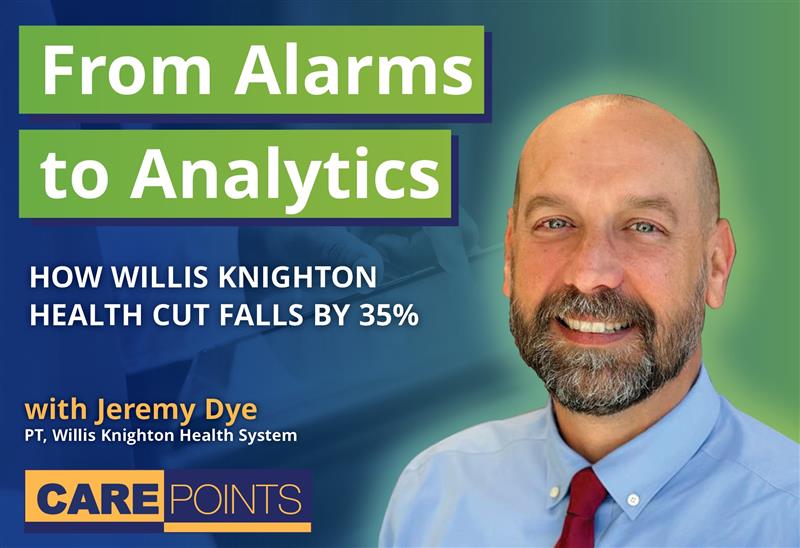
Few professionals see this challenge more clearly than Jeremy Dye, PT, Performance Improvement & Safety Coordinator for Physical Medicine & Rehabilitation at Willis Knighton Health in Shreveport, Louisiana. With 26 years of hands‑on practice across acute, outpatient, and inpatient rehab, Jeremy brings both clinical insight and a data‑driven mindset. He has managed safety programs for a stroke‑specialty rehabilitation unit with a high prevalence of neurological diagnoses and cognitive impairment, precisely the population where unassisted falls are most dangerous.
Dye’s philosophy is simple and practical: combine multidisciplinary teamwork, rigorous measurement, and fit‑for‑purpose technology, then iterate until the program works for your unique patients, staff, and unit layout. For Dye and his team, that means leveraging Alairo Solutions’ Active Fall Prevention (AFP) system to standardize monitoring, streamline communication, and generate meaningful insights that guide intervention. The question that many leaders ask is how to achieve sustained, measurable reduction without overwhelming already stretched clinical teams. As technology evolves, one lesson has become increasingly clear: reducing falls isn’t about adding more alarms or more tools; it’s about building a smarter, more human‑centered system.
Why Traditional Fall Prevention Often Falls Short
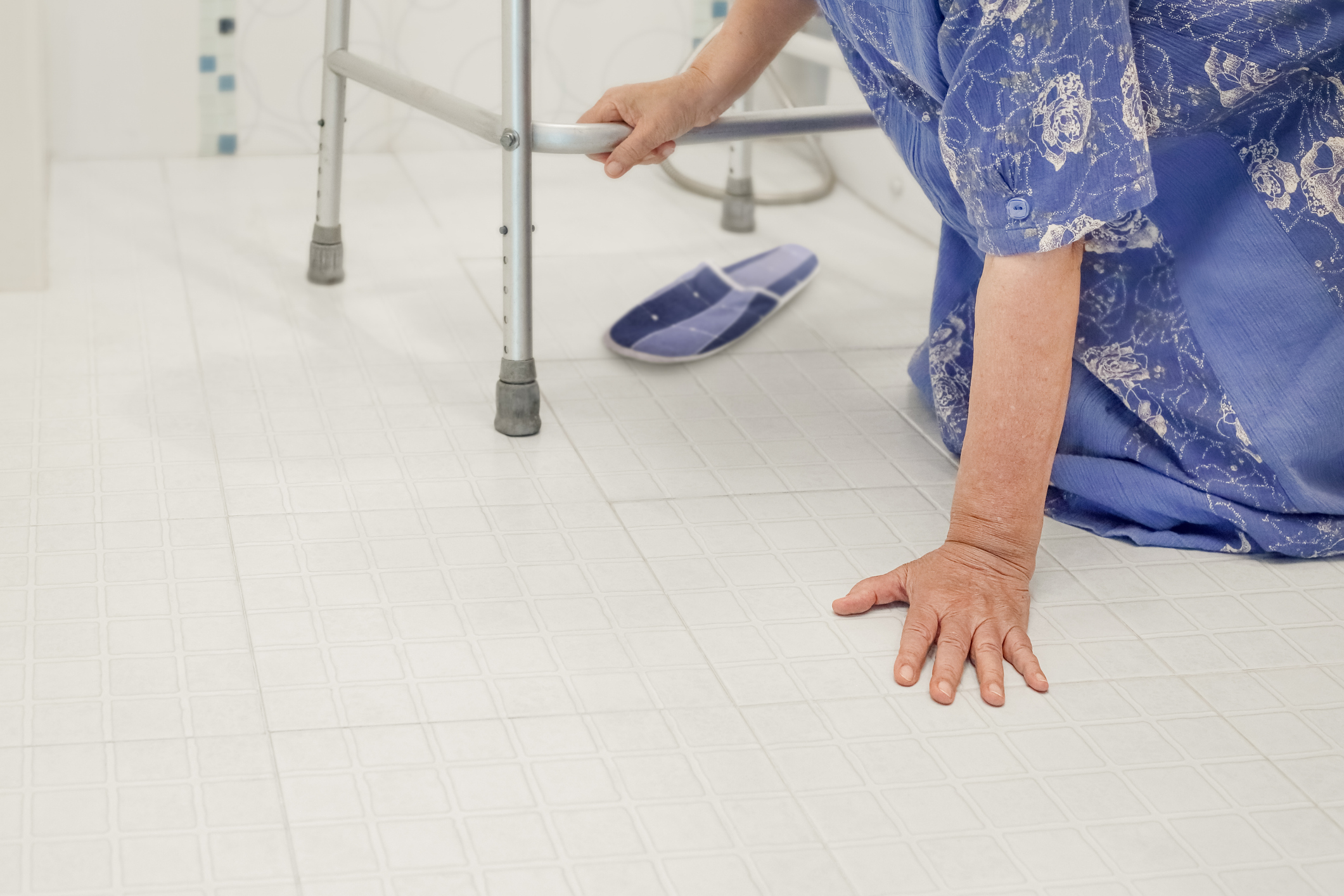
Most healthcare organizations are familiar with the standard toolkit: bed alarms, chair alarms, signage, socks, and rounding protocols. These tools are widely used and while still valuable, they often fail to deliver consistent, long-term reductions in falls.
“Falls tend to set people back,” Dye said, particularly in inpatient rehabilitation, where progress depends on forward momentum. But traditional alarms are reactive by nature. They often alert staff after a patient has already begun to stand, leaving little time to intervene, especially when unit layout, staffing ratios, or distance from the nurse station comes into play.
Even more challenging is the patient population itself. Neurological diagnoses, cognitive impairment, and poor safety awareness make education-based strategies less effective. “Those falls where there is no staff members there—those are the ones where patients get injured,” said Dye. The result is a familiar cycle: more alarms, more noise, more fatigue—and limited improvement.
The Shift Toward Predictive Fall Prevention
To break that cycle, Willis Knighton took a different approach: one grounded in multidisciplinary collaboration and predictive analytics rather than one-size-fits-all solutions.
Their program brought nursing, therapy, and leadership together to analyze fall data by unit, diagnosis, and circumstance. Post-fall huddles remained important, but the organization began focusing more intentionally on unassisted and unobserved falls, where injury risk is highest.
That shift ultimately led to the adoption of a predictive, sensor-based AI system integrated through Alairo Solutions’ AFP (Active Fall Prevention) solutions. The key difference is timing.
Instead of alerting staff only when a patient exits a bed or chair, predictive analytics identify movement patterns that suggest a patient is about to attempt to stand, giving staff a critical head start. As Dye explains, “It can get you to the room faster than you ever would have before.”
Results That Go Beyond the Hype
New technology often creates a short-term boost in attention that fades over time. What makes this story different is sustained performance.
During the first year of implementation, Willis Knighton saw what Dye describes as a “trust-building phase” with staff. Even so, one result stood out immediately: a 20% reduction in unobserved or unassisted falls—the most dangerous category.
As adoption matured, overall outcomes followed. The organization achieved a 9–10% reduction in total falls, and most recently is tracking toward a 35% reduction in both total falls and fall rates.
Equally important, staff response times improved dramatically. In many cases, nurses were able to enter rooms within 10–12 seconds of a predictive alert—fast enough to prevent a fall altogether. Dye tracked more than 365 potential falls prevented in a single year, a metric that had previously been nearly impossible to measure.
Addressing Alarm Fatigue and AI Concerns
One of the most common barriers to fall technology adoption is alarm fatigue. Adding “one more alert” can feel counterproductive to already stretched clinical teams.
Willis Knighton addressed this by tailoring system settings to patient risk. Predictive alerts were reserved for those at highest risk, while exit-only alerts were used for patients who moved frequently but safely. The flexibility mattered. “If we’re not using it right, it’s not going to do us any good,” Dye says plainly.
Another unexpected challenge was fear of AI—from patients, families, and even staff. Clear communication became essential. Dye frequently explained that the system was not surveillance and not punitive. “This is not a video feed that’s going out on YouTube or into the ether for public consumption,” he reassured families.
Over time, transparency and visible results helped replace fear with trust.

The Real Lesson: Technology Supports People, Not the Other Way Around
Fall prevention can’t be cookie-cutter. Every effective program must be tailored to patient populations, unit layouts, staffing models, and organizational culture.
Technology may feel like magic at first, but it is not everything. The real work happens in training, communication, data review, and leadership follow-through. This reinforces a core belief: successful outcomes come from aligning technology with clinical reality, not forcing workflows to bend around tools.
Moving Forward with Confidence
Falls may be common, but they are not inevitable. When predictive technology is embedded within a thoughtful, multidisciplinary strategy, meaningful and lasting improvement is possible, even in complex rehabilitation environments.
For healthcare leaders exploring their next step in fall prevention, the message is clear: start by understanding your patients, engage your staff early, and choose solutions that support, not completely replace, human care.
Jeremy Dye is a licensed physical therapist with over 26 years of clinical experience across acute care, outpatient, and inpatient rehabilitation settings. He currently serves as the Performance Improvement and Safety Coordinator for Physical Medicine & Rehabilitation at Willis Knighton Health in Shreveport, Louisiana.
In his leadership role, Jeremy focuses on patient safety, quality improvement, and fall prevention—particularly for neurologically complex and cognitively impaired patients. Known for his data-driven mindset and collaborative approach, he has helped lead a multidisciplinary fall prevention program that has achieved significant and sustained reductions in patient falls through thoughtful process design, staff engagement, and predictive AI technology.
©1991-2025 Lone Star Communications, Inc. and/or its affiliates.